National Inclusion Week: Finding Confidence and Connection Through the Things I Love
To mark National Inclusion Week, Charlotte, 17, shares what inclusion means to her and how the things she loves – from musical theatre and travelling to SEND advocacy – have helped her build confidence, find connection and feel able to be herself. Drawing on her experiences of autism, ADHD and tube feeding, Charlotte reflects on the importance of being seen for who you are, having the right support and finding people and places where you feel you belong.
This article shares Charlotte's personal experiences of autism, ADHD, ARFID and tube feeding. Everyone's experiences and support needs are individual. All views expressed belong to Charlotte and do not necessarily reflect those of Talking Tube Feeding.
Introduce Yourself
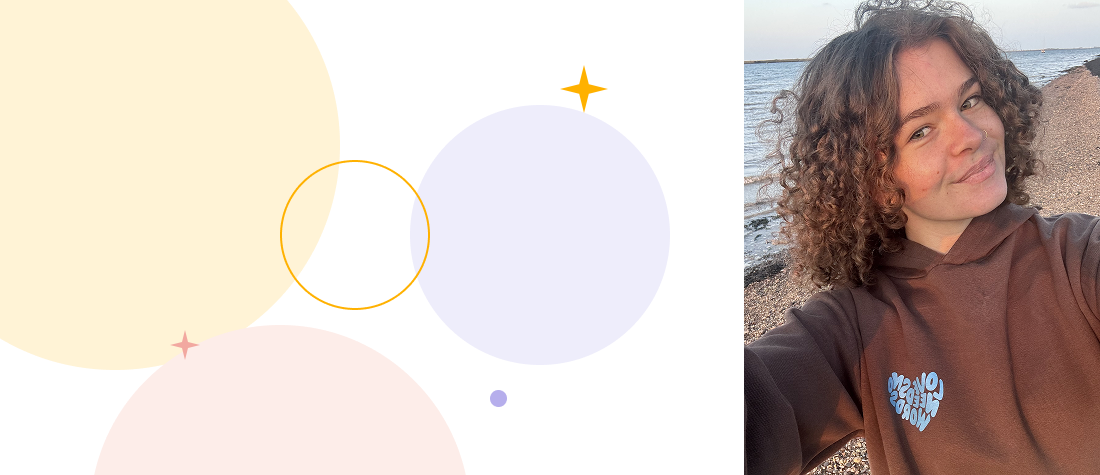
I always find it slightly strange when I'm asked to introduce myself, because I'm never really sure where to start! I'm Charlotte, I'm 17, and if you looked at my life now, you'd probably see someone who is rarely doing nothing.
I love musical theatre, travelling, working alongside children and young people, and I spend a huge amount of my time involved in SEND (Special Educational Needs and Disabilities) advocacy too. I create content online, speak at events, travel around the country independently and, right now, I'm starting a completely new chapter in education, working towards a future where I can hopefully support children and young people with SEND myself.
I'm also autistic, have ADHD, FND, PoTS and ARFID (very spicy!), and I spent just over a year of my life being fed through an NG tube. Those things have obviously shaped a huge amount of my life, and I talk about them very openly, but I've never wanted them to be the most interesting thing about me.
If anything, the last few years have taught me just how important it is to have things in your life that remind you who you are outside of the appointments, diagnoses, meetings and whatever happens to be difficult at the time.
There have definitely been times when I've lost that. My world has been incredibly small at times. I've struggled to access education and spent huge amounts of time dealing with hospitals and professionals, with periods where my health dictated almost everything about my day.
When so much of your life becomes about what you're struggling with, what you're managing, what you're eating or how you're being fed, it can become very easy for other people to see those things before they see you. And, if I'm completely honest, sometimes I started seeing myself that way too.
But underneath all of that, I was always still me.
Finding Confidence Through the Things You Love
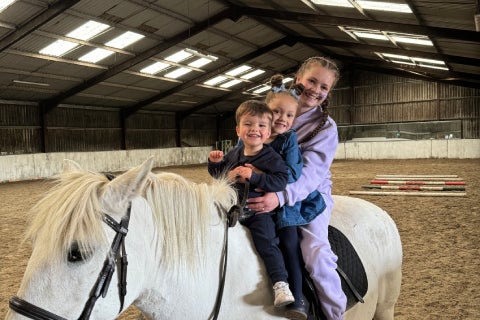
Musical theatre has been a huge part of finding my way back to the things that make me feel like myself.
I'm someone who can find walking into an unfamiliar room utterly terrifying. I can struggle to communicate when I'm overwhelmed, and there are situations where I need a huge amount of reassurance and support. Yet I can also walk onto a stage and perform in front of hundreds of people.
I love rehearsals, being part of a cast and that feeling when something you've spent weeks working on finally comes together. Performing gives me a confidence that doesn't always exist in the rest of my life, and I think it's also a really good example of why you can never decide what somebody is capable of based on their diagnosis or seeing them struggle in one particular environment.
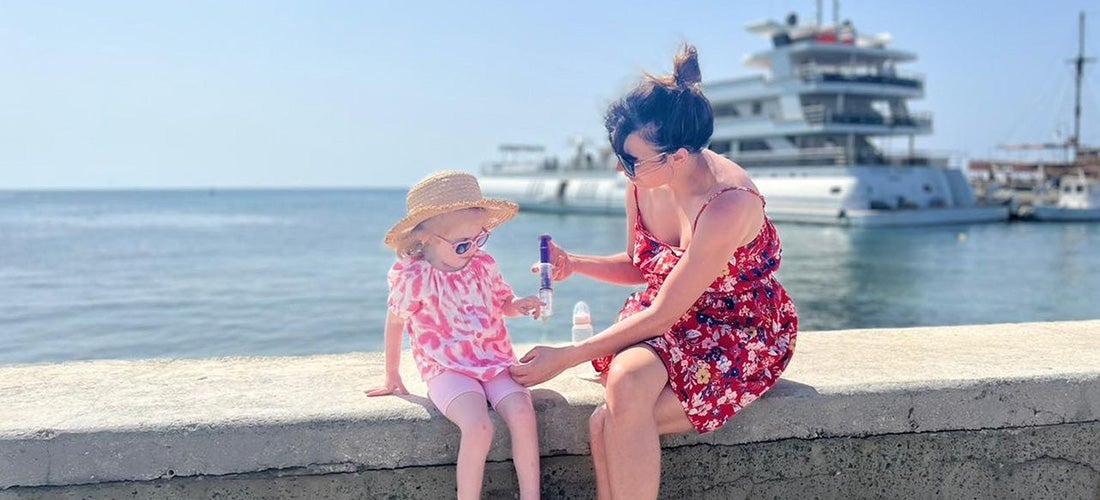
Travelling has given me a similar confidence. I absolutely love going somewhere new, and being able to travel independently is something I'm really proud of.
It would be easy to look at me doing that and assume I don't need much support, but that's not how it works. I risk assess everything, carry emergency information, wear my sunflower lanyard and have plans in place for the things that could go wrong. There are also plenty of situations where I do need another person with me.
I've had to learn that those things aren't contradictory. I can travel hundreds of miles independently and still need somebody I trust beside me to walk through a door sometimes.
Personally, I think that's one of the biggest misconceptions around inclusion and independence. We can become so focused on getting somebody to a point where they don't need support that we forget the support might be the exact thing allowing them to do it in the first place.
Being included shouldn't mean proving you can manage in exactly the same way as everybody else. Sometimes it means doing the same thing differently. And that's okay.
Finding Connection and Community
I've found a real sense of connection through the SEND community too. I started sharing my experiences online back in 2024 because I wanted to be honest about what life actually looked like for me.
Over time, that has led to opportunities I never expected: speaking at events, travelling around the country to be involved in different SEND projects, meeting other incredible young people and families, and becoming part of communities full of people I probably never would have met otherwise.
The opportunities are amazing, but the people are the bit that has mattered most.
There is something incredibly freeing about being around people who don't need every part of you explaining to them. People who understand that sometimes I'll be the loudest person in the room and sometimes I'll barely speak. People who don't think less of me if I need to leave for five minutes, communicate differently or have somebody with me.
Finding people who accept all of those versions of me has probably done far more for my confidence than being told to 'believe in myself' ever could.
That's why, when I think about what inclusion means to me now, I don't think simply about being invited somewhere. Being physically present and actually feeling included are two very different things.
I think about the people who notice when I've suddenly gone quiet. The people who give me an extra five minutes without making it a big deal. The people who ask me what would help instead of deciding for me. The people who let me step out and make it clear I still have a place at the table.
Above all, I think about the people who understand the things I find difficult without letting those things become the limit of what they think I'm capable of.
That's especially important to me right now because I've just started a new education provision. My journey through education hasn't exactly been straightforward, and starting again brings up a lot more feelings than simply being excited for a new term!
One thing I'm determined to do differently this time is not arrive as the version of myself I think everybody wants me to be. I've spent a lot of years becoming very good at looking like I'm coping, and I'm slowly learning that being included as a masked version of myself isn't really inclusion at all.
I want to be able to say when something is too much, accept support before I've completely reached my limit and know that having difficult days doesn't erase everything I'm capable of.
Being Seen as Me
Being seen as the person behind my feeding tube has been another huge part of learning that.
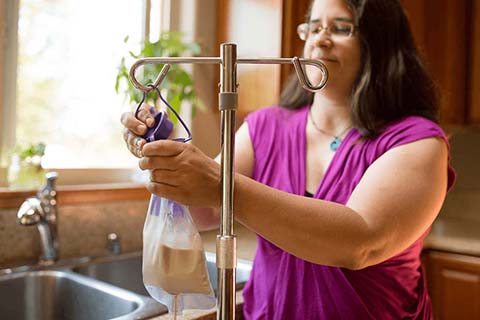
For just over a year, I had an NG tube on my face. It was visible, so of course people noticed it, asked about it and sometimes even made assumptions based on it. Tube feeding was a massive part of my life, and because I shared my experiences publicly, it became something lots of people associated with me too.
But I was never just the girl with the feeding tube.
I was still going to musical theatre. I was still travelling. I was still making plans, meeting people, laughing, learning what mattered to me and figuring out what I wanted my future to look like. My feeding tube was there to support me through a period when I needed it; it was never there to become my personality.
My relationship with ARFID isn't a perfectly finished story now either. I'm actually learning a lot at the moment about what it means to accept my needs rather than constantly trying to prove that I don't have them.
All these experiences have also shaped what I want to do next. I'm working towards qualifications in childcare, with the hope of eventually working with children and young people with SEND.
I've been the young person who needed somebody to look beyond what was happening on the surface, and I know just how much of a difference one person who just gets it can make. The adults who have had the biggest impact on me haven't been the ones who tried to make me smaller and easier to manage. They've listened, adapted, stayed consistent and continued believing I could have ambitions even if I needed a lot of support to reach them.
A few years ago, I thought inclusion meant learning how to fit in. I spent a lot of energy trying to become better at coping with environments that didn't really work for me.
But now, I think the opposite.
I don't think inclusion should require you to make yourself smaller first.
Closing Thoughts
For anyone who hasn't found somewhere they feel they belong yet, I wouldn't tell you to just be more confident, because we both know it doesn't work like that!
I'd tell you that one environment not working doesn't automatically mean you won't thrive in another. I'd tell you to try the thing you're interested in, even if you need somebody to go with you the first time. Ask for the adjustment. Take the opportunity. And find the people who make you feel safe enough to just be – even if that version of you isn't always coping.
I'm only 17, and I'm still figuring out where I fit too. I'm at the very beginning of another new chapter and there are still days when I feel like I can take on the world, followed by days where walking through a door feels like the biggest achievement.
But when I look at how small my world has felt at different points in my life, and then look at everything and everyone in it now, I realise that confidence isn't something you have to find before you start living.
Sometimes it comes from finally finding people and places that give you enough room to become yourself.
And, to me, THAT is inclusion!
If you'd like to share your tube feeding journey with us, we'd love to hear from you. Contact talkingtubefeeding@uk.nestle.com.