Nikki and Avery's Story: Living with ARFID, Autism and Tube Feeding
To mark ARFID Awareness Day, we're sharing Nikki and Avery's story. Nikki reflects on her daughter's journey with ARFID, autism and tube feeding, and hopes that by sharing their experience, other families will feel seen and supported.
This article shares Nicola and Avery’s experience of tube feeding under an individual care plan given by a healthcare professional. Please do not change a care plan without speaking to a dietitian. All views expressed belong to Nicola and her family, and do not necessarily reflect those of Talking Tube Feeding.
Meet Avery
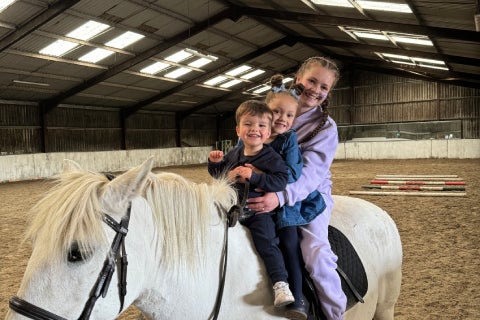
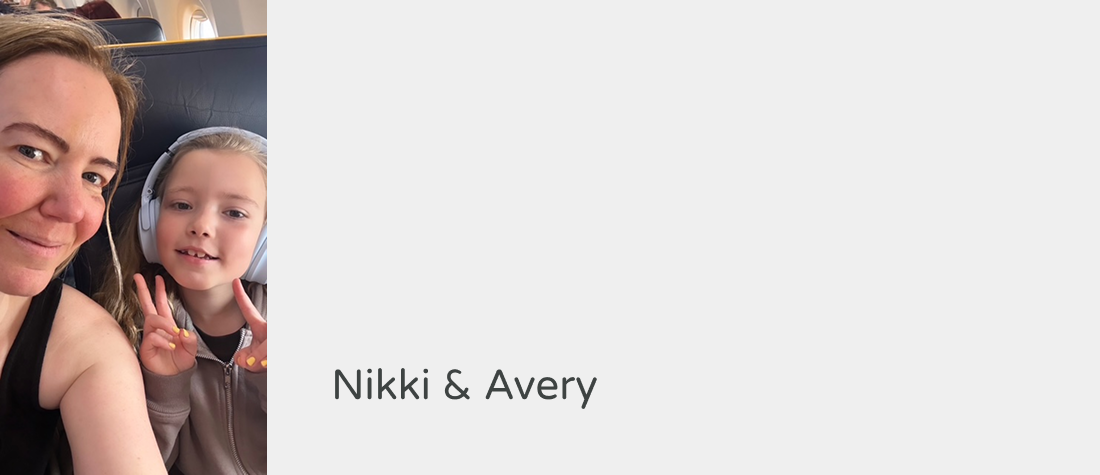
My name is Nikki, and I’m mum to Avery, who turns eight this Halloween.
Avery is autistic and has ADHD, ARFID and Pica, alongside developmental delays and complex kidney, bladder and bowel conditions. She attends an independent specialist school for autistic children. Life can be challenging at times, but Avery is happy, content and doing really well. She is medically stable, growing well and enjoying life, which is something we never took for granted when she was younger.
I wanted to share our story for ARFID Awareness Day because ARFID is so often misunderstood. People often hear the words "eating difficulties" and assume it means fussy eating, but our experience has been very different.
ARFID (Avoidant Restrictive Food Intake Disorder) is a complex eating disorder. For some individuals, sensory sensitivities, anxiety or fear around food can make eating feel overwhelming.
When did you first realise Avery was struggling with food?
Looking back, the signs were there from a very young age.
Avery was weaned in exactly the same way as my other four children. I made all of her food from scratch and froze it into ice cube portions, just as I had done before. In the beginning, she accepted lots of different flavours and there was nothing to suggest the challenges that lay ahead.
Things started to change when we moved on from smooth purées to lumpier textures. From around 12 months old, Avery stopped accepting dairy products, fruit and vegetables. Food became increasingly difficult for her. She would gag, choke and sometimes be physically sick when food touched her mouth. Even touching certain foods with her hands would cause a strong reaction.
What does ARFID look like for Avery?
One of the biggest misconceptions about ARFID is that it’s simply refusing food. For Avery, food can trigger a genuine physical and emotional response. Eating isn’t a choice she is making. It is something that feels difficult and overwhelming.
Today, Avery can eat orally, but only a very small number of foods feel safe to her. Sometimes she may have three or four foods she will eat. Other times she may only have one. She can eat the same thing every day for months and then suddenly stop accepting it altogether.
At the moment, her safe foods are a particular chocolate bar, a particular vanilla fudge and a particular strawberry fruit string. Occasionally, she might eat a fast-food chicken nugget, but even that isn’t guaranteed.
Before her tube was placed, Avery did experience hunger, but that didn’t mean she could eat. Even when she was hungry, she often couldn’t overcome the anxiety, sensory difficulties and barriers that food created for her. Watching your child feel hungry while being unable to eat enough is heartbreaking. She would climb onto the kitchen worktops, searching through cupboards and drawers for a food she would accept, which was rarely anything.
Food affects much more than what goes into Avery’s mouth. She won’t smell food and she won’t touch most foods either. Strong smells can be overwhelming and can lead to distress and challenging behaviour, particularly at family mealtimes. Even sitting in the same room as certain foods can feel impossible for her.
As part of her EHCP (Education, Health and Care Plans), Avery accesses an SOS feeding programme and takes part in exploratory food play at school. Progress looks very different for children with ARFID. Success might be looking at a food, tolerating it nearby, touching it briefly or engaging with it through play. These small steps may not seem significant to others, but they are huge achievements for Avery.
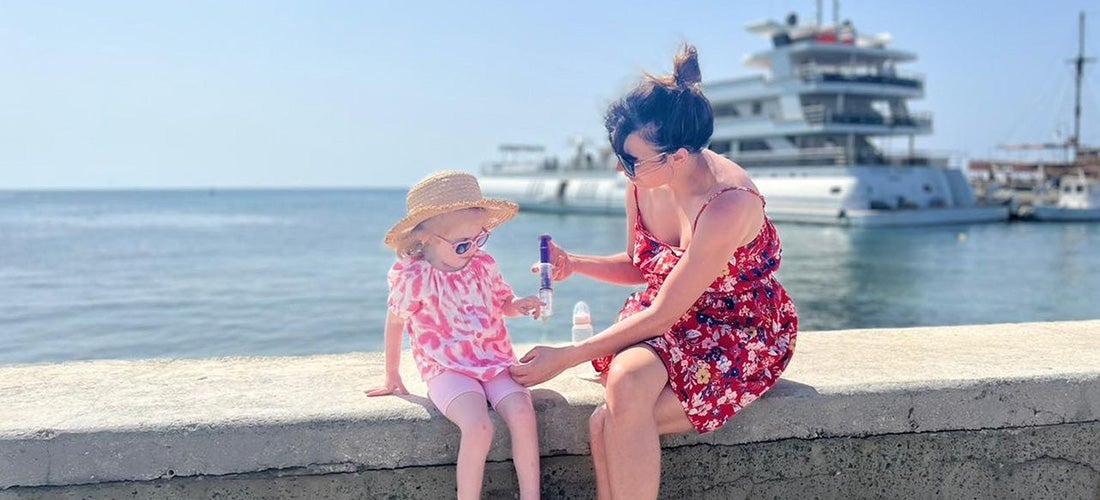
Interestingly, Avery often does better when she is away from home. Her Nana lives in Portugal and whenever we visit, Avery often surprises us. Recently she tried crusty bread and chocolate ice cream, which completely amazed me. Her dietitian has explained that this isn’t unusual. Sometimes a change in environment can reduce some of the pressure around food.
At home, eating often feels like part of a routine she follows rather than something she enjoys. Even when she eats her usual fudge for breakfast, her facial expression often suggests disgust rather than enjoyment. She eats because it feels safe and familiar, not because she enjoys eating it.
Why was tube feeding recommended?
Avery’s tube wasn’t placed because of ARFID alone.
Before her tube was placed, it often felt as though we were living at the hospital. We simply couldn’t keep her healthy. Between her medical conditions, poor fluid intake, difficulties taking medication and repeated infections, hospital admissions became a regular part of our lives.
Avery was born prematurely at just 29 weeks and has lived with complex medical needs since birth. Throughout her early childhood, she spent a huge amount of time in hospital because of her kidney, bladder and bowel conditions. She relies on daily medication to help prevent infections, but she would not take medication orally.
Hospitals were incredibly overwhelming for her. As an autistic child, the environment itself was stressful and frightening. There were times when Avery became so overwhelmed that she would wedge herself underneath hospital beds to escape.
By the time tube feeding was suggested, we were exhausted and frightened.
How has tube feeding changed Avery’s life?
Looking back now, having a gastrostomy felt life-changing.
Avery had her gastrostomy fitted almost three years ago. Her first tube lasted two years before being routinely replaced and she now has a 9Fr Freka PEG.
She wears handmade tummy pads designed around her interests. At the moment, most of them feature Peppa Pig.
The tube allows us to give Avery the nutrition, fluids and medication she needs to stay healthy.
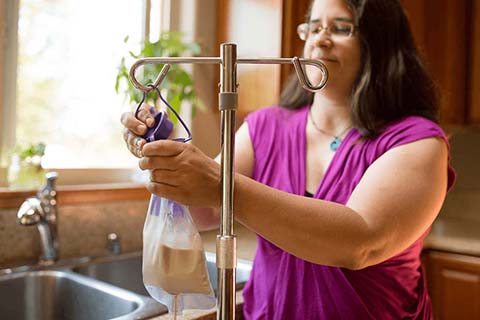
Avery has three feeds via her gastrostomy each day through a feeding pump. One of those feeds happens at lunchtime while her classmates are eating their lunch. She still takes a lunchbox to school every day with her safe foods inside because we continue to encourage oral eating alongside tube feeding.
She has a little backpack for her feeding equipment. Sometimes she carries it herself and other times her teaching assistants carry it for her, so she can run, play and take part in school without restrictions.
Tube feeding didn’t stop Avery from eating orally, and it didn’t stop us supporting her feeding journey. What it did do was remove the constant fear that she wasn’t getting what her body needed to stay healthy.
We no longer live with the constant fear of repeated hospital admissions or the challenge of getting essential medication into her, as it’s all given through her tube.
The tube hasn’t changed who Avery is. She still has ARFID. She still has safe foods and challenges around eating and drinking. But it has given her safety, stability and the chance to thrive.
Today, Avery loves spending time on her iPad watching her favourite YouTuber, playing Toca World, role play, sensory play, especially slime, and anything to do with Peppa Pig. Seeing her able to enjoy being a child without constant hospital admissions is something we never take for granted.
What do you wish people understood about ARFID?
If I could tell other families one thing, it would be this: trust yourself. You know your child better than anyone. ARFID is real, the challenges are real, and seeking support is never giving up.
I hope that by sharing Avery’s story, more people will understand that ARFID is so much more than fussy eating. Behind every child is a unique story, and sometimes the biggest victories are the ones nobody else can see.
Most importantly, I hope other families know they are not alone. There is hope, there is support, and there can be brighter days ahead.
If you’d like to share your tube feeding journey with us, we’d love to hear from you. Contact talkingtubefeeding@uk.nestle.com.